Nosferatu
Right away I am going to say that Nosferatu really wasn't my favorite. No matter the amount I want to impress the cool film folk in this class, including 😇Amy Ongiri😇, I just haven't had that really great old film silent film that I have immediately fallen in love with *though I am very open to it and won't stop looking*. But as far as my opinions about this film are concerned, I wasn't it really in awe, except for maybe that one really satisfying shot of Nosferatu in the doorway.
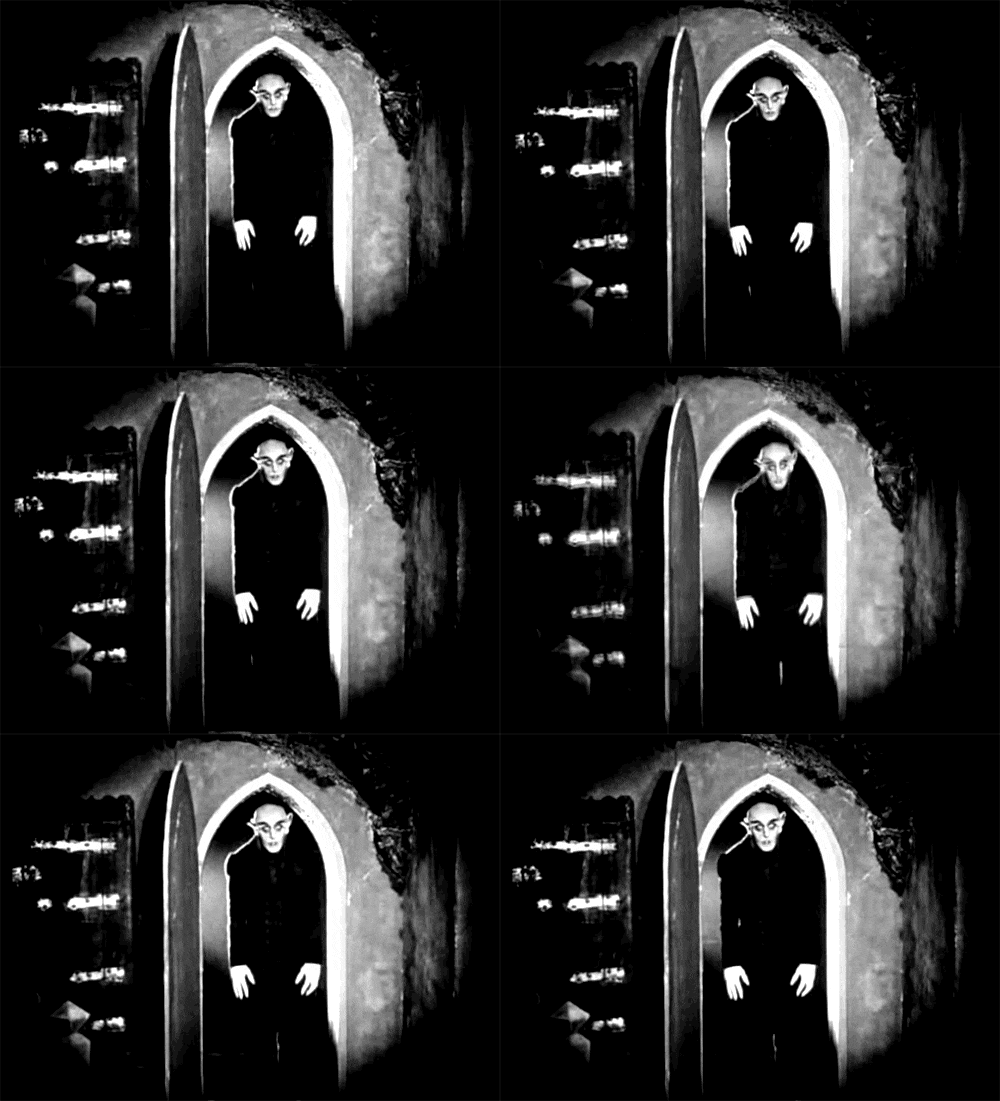
 ANOTHER ALSO. The shadow shots were amazing. Like, very beautiful. Talk about iconic. I suppose I can't just talk about aesthetics, the whole time though, so here is my shot at some analysis.
After reading a few other blogs, I became interested in the notion of visibility in the genre in relation to queerness. As Benshoff's article stated, homosexuality in the eyes of the "normal" or hetero world is seen as a monstrous condition.

In Nosferatu, this monstrous homosexual takes the form of Nosferatu the vampire, but this fact remains unbeknownst to the victims. The thing about vampires is you can't really tell they are vampires until they have revealed themselves or are literally sucking the blood out of your neck. They are invisible in the public eye. This just so happens to align with the fear that is associated with homosexuals. You, yes you, could be aquatinted with a queer person and wouldn't even know it. Jonathan sure doesn't. In fact, he is so unaware that he attributes his attacks to dreams (I won't get into how gay that is. Like. Dreaming about a male vampire feasting on your flesh? Yeah. You get it). So it seems that Vampires and queer folk go hand in hand, in popular culture anyway. It makes me think about the portrayal of vampires in general. They are often sexually ambiguous and many times their gender performance can be called into question. Subtextually speaking, all vampires are gay, really. Anyway, all those shadow shots I was talking about earlier? It just seems like the fear is of the invisible, the unknown. Ellen is never even attacked by a physical presence, it is literally a shadow. Same with attributing the attacks to dreams; the 'dream' was the terrifying part of the experience, that is exactly what Jonathan wrote to Ellen when he was away. Just makes ya think. *maybe even tie in something about the unknown/mysterious location of Nosferatu's castle* **maybe even go further and say something about scary gay rural folk?**
The other thing I got to thinking about was the sexual deviance that both vampires and homosexuals represent. Bershoff noted that gay victims in horror are often "deserving" in the context of the movie for their sexuality. And as we discusses with The Texas Chainsaw Massacre, that is what gets the girls killed off, their sexual promiscuity that also made them "deserving". As I've said before, I am really not familiar with the horror genre, but I wonder how that applies to contemporary films of the genre. Are minorities, deemed overtly sexual, still be killed off for it? hmmm.
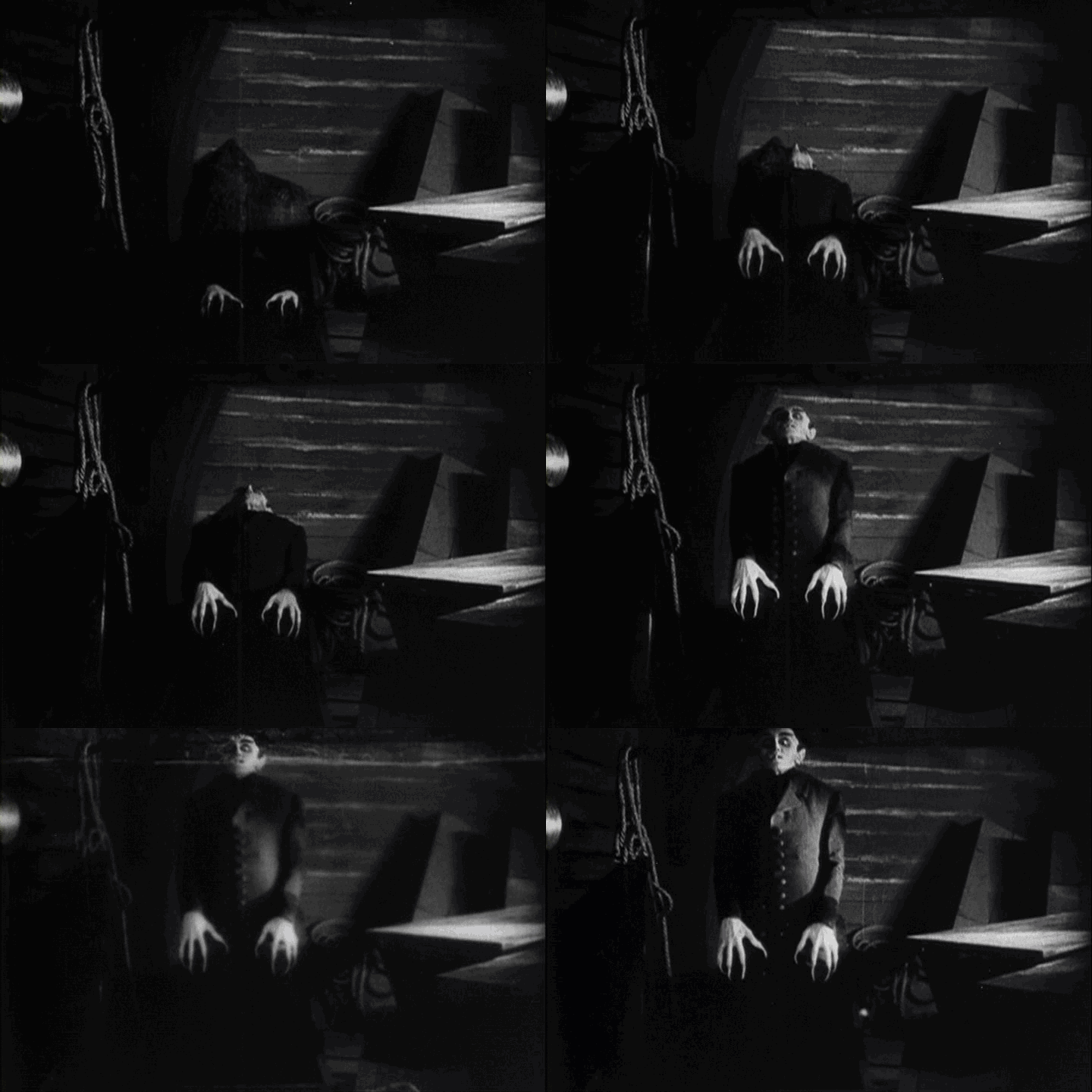
ALSO. That shot of him sitting up without bending a single appendage had me and my mom dying for about two hours we watched the film.

After reading a few other blogs, I became interested in the notion of visibility in the genre in relation to queerness. As Benshoff's article stated, homosexuality in the eyes of the "normal" or hetero world is seen as a monstrous condition.

In Nosferatu, this monstrous homosexual takes the form of Nosferatu the vampire, but this fact remains unbeknownst to the victims. The thing about vampires is you can't really tell they are vampires until they have revealed themselves or are literally sucking the blood out of your neck. They are invisible in the public eye. This just so happens to align with the fear that is associated with homosexuals. You, yes you, could be aquatinted with a queer person and wouldn't even know it. Jonathan sure doesn't. In fact, he is so unaware that he attributes his attacks to dreams (I won't get into how gay that is. Like. Dreaming about a male vampire feasting on your flesh? Yeah. You get it). So it seems that Vampires and queer folk go hand in hand, in popular culture anyway. It makes me think about the portrayal of vampires in general. They are often sexually ambiguous and many times their gender performance can be called into question. Subtextually speaking, all vampires are gay, really. Anyway, all those shadow shots I was talking about earlier? It just seems like the fear is of the invisible, the unknown. Ellen is never even attacked by a physical presence, it is literally a shadow. Same with attributing the attacks to dreams; the 'dream' was the terrifying part of the experience, that is exactly what Jonathan wrote to Ellen when he was away. Just makes ya think. *maybe even tie in something about the unknown/mysterious location of Nosferatu's castle* **maybe even go further and say something about scary gay rural folk?**
The other thing I got to thinking about was the sexual deviance that both vampires and homosexuals represent. Bershoff noted that gay victims in horror are often "deserving" in the context of the movie for their sexuality. And as we discusses with The Texas Chainsaw Massacre, that is what gets the girls killed off, their sexual promiscuity that also made them "deserving". As I've said before, I am really not familiar with the horror genre, but I wonder how that applies to contemporary films of the genre. Are minorities, deemed overtly sexual, still be killed off for it? hmmm.
ONE MORE ALSO: Reinfeld as obsessed bf that can't let go?? Highly likely.


Oh my gosh YES! I really agree with a lot of things here-- for starters, I wasn't wildly entertained by Nosferatu, but I think that some of the shots were quite cool. I have that GIF of the count rising out of his coffin on my blog right now too. What I'm really agreeing with you here though is the "all vamps are gay" sentiment because that is kind of what I was getting at in my blog post too.
ReplyDeleteHey Ursa, have you heard the urban legend that if you dont like the film Nosferatu, he will come and visit you every night until you die? You bring up some really interesting pints in relationship to the use of shadows in this film and their subliminal signaling of the realm beyond the visible. I think this film really does a lot with liminality and the spaces in between whether it is the space between life and death that the vampire represents or the shadow spaces themselves.
ReplyDeleteHell yeah, Ursa. I feel like I might be doing something risky by reading too much into aesthetic decisions, when I know very little about how filmmakers use specific images to convey specific meanings, but you talking about the spooky shadow shots and then immediately launching into the fact that vampires and queer ppl both could very well appear to be an average heterosexual in an average heterosexual world... idk, it just got me thinking, can we interpret the fact that Orlok is constantly rendered as but a shadow to possibly allude to the invisibility of queer people? Probably not, hell, just throwing it out there.
ReplyDeleteI like your point about Count Orlok existing in the shadows, and that representing the fear of the invisible aka queer. I didn't think of that until now but it makes a lot of sense!
ReplyDelete