The Texas Chainsaw Massacre
Okay, so I am not sure how formal these posts are supposed to be, but I am just going to go for it and see what happens.

Something that sparked my interest (aside from a lot of things) in The Texas Chainsaw Massacre, was who the audience chose to identify with. Carol Clover's chapter on "Her Body, Himself" made it clear that there are many switches in the identifications we feel as we watch a horror film. There are times we are cheering the killer on as he chases his victims to their inevitable deaths and there are other times where we root for the "Final Girl" who, against all odds, defeats the monster and wins the fight. And this all has to do with the prepubescent sadomasochistic outlook. According to Williams, teenagers are at an in-between as far as gender is concerned, still in development, not strictly identifying with either masculine or feminine characters. SO ANYWAY, its all got to do with the fact that deep down we want to hurt others and we want them to hurt us. The great thing is, we can satisfy these urges through horror movies, as it provides a place for these fantasies to play out without anything ever actually happening to us.
So when my mother (who I have forced to watch this term's material with) confided in me the day after we watched the film that she empathized with Leatherface in his last moments, I was a bit curious. Apparently, as his chainsaw fell on his leg during his chase with Sally, she shrieked and felt bad for the guy. Now, I know this can be interpreted as her just getting that hair-tingling feeling when we watch gruesome content, but she specifically told me that she felt bad for the guy.
This made me consider how one could feel that way towards the killer, especially one with a chainsaw. But as a thought about it, it kinda made sense. Leatherface, as many other slasher villains, is stuck psychologically in childhood. As Clover pointed out, male killers seem stuck in an infantile fury, and this is 100% reflected in Leatherface's character. The movie almost plays him out as a child, in a way (minus the chainsaw). He is a large man, but arguably adolescent in the way that he is shown as more baby fat-ish as opposed to muscular. Abused physically and verbally, he has retained the role of child, following orders from his father. One scene specifically highlights this childlike mindset. After Leatherface kills Jerry, he realizes that his victims are not alone. Upon finding out, he reacts in the way a toddler might; he yells in a high-pitched (almost humorous) tone, distraughtly paces back and forth, and when he settles on a plan, he mischievously grins in a way I only recognize from badly behaved children.
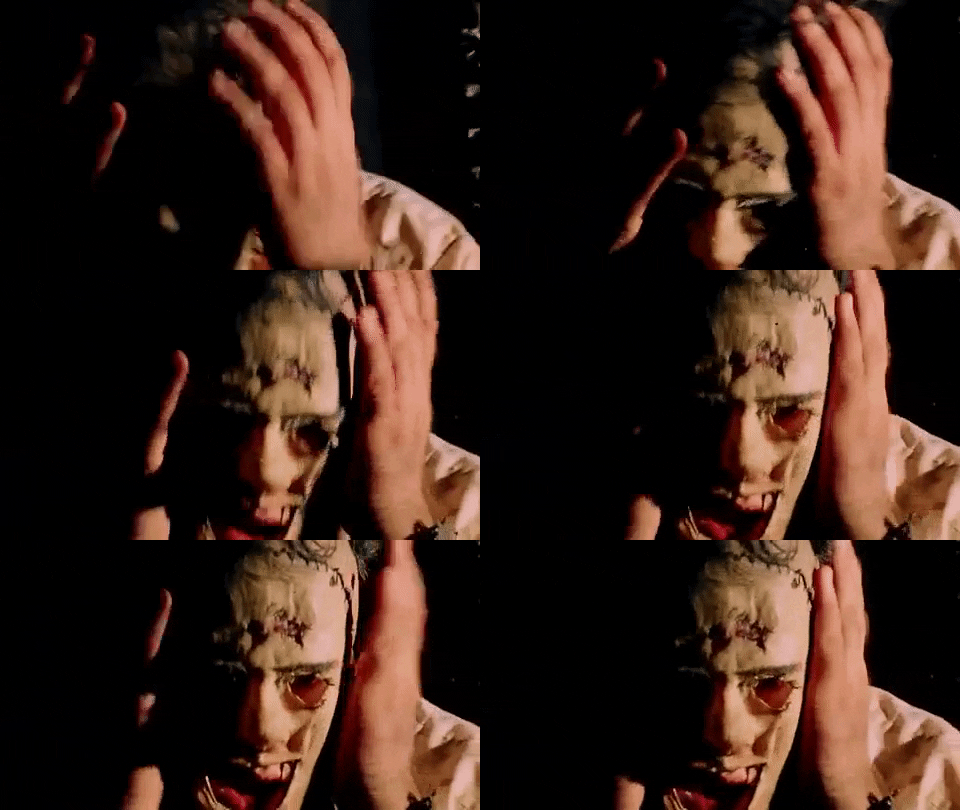
His child-like demeanor is why audiences, like my mother, can empathize with him, even after he has killed about four other innocent people. As much as he is played out to be a cold-blooded killer, it seemed evident to me that his intentions went beyond mere malice. Leatherface, in a way, was also a victim in the plot. Clearly, his paternal and maternal figures fucked this guy up and it made me feel a bit bad for him.
But maybe its fucked up for me to be even saying any of this... what do y'all think?
Also here is a questionable pic of me with a chainsaw this week in spirit of the film.


First of all, I LOVE the picture of you with a chainsaw AHAHA
ReplyDeleteBut yeah! I totally agree with you on how strange it is that the audience feels somewhat empathetic towards Leatherface because I honestly felt the same way when watching. I remember thinking "Awh, I kinda feel bad for him" when he was having his litte toddler-like breakdown. This idea makes me wonder if the added feminine qualities (the wig and makeup) to him later in the film also bring some sort of empathy from the audience? I'm not super sure about that, but kind of going off of the idea you mentioned about how the horror genre allows adolescents play out their gender fantasies - maybe the way that Leatherface ends up having feminine characteristics also helps audiences identify with him.
God, literally the same thing that happened to you, Ursa, happened to me, so I'm gonna try to type the whole comment that I just accidentally deleted all over again.
ReplyDeleteI was how I think it's super interesting the way in which you're talking about identification here. I think I was saying that it is curious how we, the viewers, are able to identify with Leatherface (because feeling bad for him/feeling his pain = identifying) in this moment towards the very end of the film, because he slices himself with the chainsaw at this super critical moment in the Final Girl-Final Chase, and if he hadn't cut himself right then, Sally would not have been able to escape. But, at this point, we are also supposed to be identifying with Sally more than ever! This comes back to that thing that I really can't remember who said it in which article, but Amy paraphrased it in our discussion today, how the horror in slashers sort of comes from the viewer's ability to flip-flop very quickly between who they are identifying with, and the tension between the two? Right? I think that was it.
I was ALSO trying to say that I honestly worse for Nubbins/Hitchhiker when he gets flattened by the semi, which is strange, because he is more outwardly evil than Leatherface, but I think the fact that he isn't wearing like a mask of human hide the entre time makes it easier for me to see him as human. Also... he's kinda cute? Idk. Maybe that's just 'cuz he reminds me of Eric.
Your picture and the fact that you made your poor mom watch this film is so awesome! I want you to remember how great your mom is when you're watching the less than great moms in movies like The Babadook and Hereditary. I think you make some really excellent points about identification and I'm wondering what you think about Camille's observations about femininity and masking.
ReplyDelete