Hereditary
Second time around, this movie wasn't tooooo bad. To be fair, the first time I watched this was in the middle of the woods in Wyoming with no cell service in a tiny wooden cabin, so I was already pretty freaked out. Either way, Hereditary has still scared me more than any other movie we have watched in this class, but I still haven't figured out if I like it or not. Quality aside, I did like how this movie worked into Creed's ideas of the archaic mother and the monstrous womb.
In a way, I think that the satanic cult in Hereditary embodies a lot of what the archaic mother stands for. The archaic mother is the maternal force that conceives all on her own, without man, rendering her abject. She is abject because she does not rely on any concept of masculinity; she horrifies in her own right as the originating womb that gives life just as easily as she takes it. The insidious maternal line that lies in the Graham family is conceived without the male. In the film, Peter, is used merely as "pawn in a horrible hopeless machine" to ensure the matriarch's continuance. With the archaic mother comes the desire to return to the womb, to resume oneness with the mother, signifying a loss of self after the development of autonomy. Arguably, every family member (except for maybe the father) follows this as they trade their death to become part of the cult, under the mothering of Charlie's spirit. Quite visually, all of the dead bodies crawl into the small, red-lighted, uterine like dwelling of the tree house to welcome their new queen. Creed said that death is the desire of continuity and the loss of all boundaries formerly created. By dying for the cult, the bodies are continuing the hereditary blood line within the females of the graham family. It is this coming together, the sacrifice of self that is abject as the learned autonomy of the law of man falls back into the realm of the mother.

The monstrous womb symbolizes the fear of generative power: "the disease of being female". In the Graham family, it is the women's reproductive capacity that enables them to continue the cult. Their monstrous wombs create abject offspring that carry those same traits. What is even more abject is the woman who denies her maternal desires, like Annie who divulges that she tried to induce a miscarriage when she was pregnant with Peter. Charlie herself is on the brink of puberty at thirteen years old, threatening symbolic order with her own developing fertility, so it only makes sense that she was inducted into the cult as she came to this stage in her life. Again, men in this film really only serve as vessels to enhance the female's power. Creed draws a line between the womb and the cycle of life and death, which serves to remind men of their own mortality and the fragility of symbolic order. Both of the men die to serve the continuance of the matriarch who, because of her generative power, is virtually immortal.
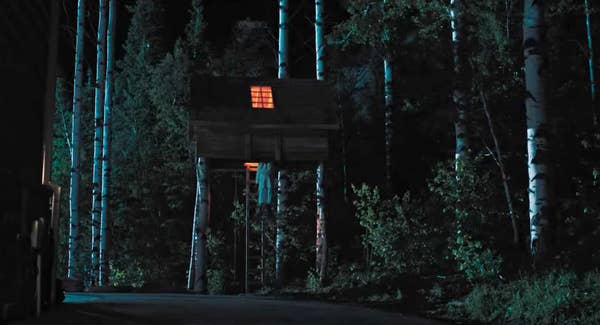
In a way, I think that the satanic cult in Hereditary embodies a lot of what the archaic mother stands for. The archaic mother is the maternal force that conceives all on her own, without man, rendering her abject. She is abject because she does not rely on any concept of masculinity; she horrifies in her own right as the originating womb that gives life just as easily as she takes it. The insidious maternal line that lies in the Graham family is conceived without the male. In the film, Peter, is used merely as "pawn in a horrible hopeless machine" to ensure the matriarch's continuance. With the archaic mother comes the desire to return to the womb, to resume oneness with the mother, signifying a loss of self after the development of autonomy. Arguably, every family member (except for maybe the father) follows this as they trade their death to become part of the cult, under the mothering of Charlie's spirit. Quite visually, all of the dead bodies crawl into the small, red-lighted, uterine like dwelling of the tree house to welcome their new queen. Creed said that death is the desire of continuity and the loss of all boundaries formerly created. By dying for the cult, the bodies are continuing the hereditary blood line within the females of the graham family. It is this coming together, the sacrifice of self that is abject as the learned autonomy of the law of man falls back into the realm of the mother.
The monstrous womb symbolizes the fear of generative power: "the disease of being female". In the Graham family, it is the women's reproductive capacity that enables them to continue the cult. Their monstrous wombs create abject offspring that carry those same traits. What is even more abject is the woman who denies her maternal desires, like Annie who divulges that she tried to induce a miscarriage when she was pregnant with Peter. Charlie herself is on the brink of puberty at thirteen years old, threatening symbolic order with her own developing fertility, so it only makes sense that she was inducted into the cult as she came to this stage in her life. Again, men in this film really only serve as vessels to enhance the female's power. Creed draws a line between the womb and the cycle of life and death, which serves to remind men of their own mortality and the fragility of symbolic order. Both of the men die to serve the continuance of the matriarch who, because of her generative power, is virtually immortal.


Hi Ursa love the post I love your discussion on the monstrous womb being a generative power.
ReplyDeleteI also was thinking about the tree house representing a womb! I really like that connection you made with that to how they are welcoming the birth of the demon. I also think your point about Annie's attempt to have a miscarriage with Peter to deny her maternal role is really important and interesting! While Annie was, maybe, subconsciously trying to stop the vicious cycle continue, her efforts were punished. On top of that, the film doesn't exonerate her for doing that - I felt like that back story was used to reveal that she, like her mother, is not the ideal mother.
ReplyDeleteI like your comment about "the disease of being female" being the reproductive line in the Graham family, and how Annie's failed attempt at stopping it ended up being how the monstrosity continued. I found myself confused after watching the film though, because Peter didn't represent the matriarchal power that the film was based around, and making him the surviving king didn't follow the logic previously presented. I guess that's why I had a hard time analyzing this one, since it seemed to be a little bit confusing in its intentions.
ReplyDelete